The Importance of Organic Keyword Intelligence in E-Commerce
Paid advertising costs continue to rise across Meta, Google Ads, and TikTok. For e-commerce brands striving to maintain profitable net margins, acquiring customers through organic search traffic is no longer optional—it is a vital competitive moat.
However, ranking an online store on Google requires targeting search terms that real shoppers actually type when they are ready to purchase. Using a specialized ecommerce keyword research tool allows you to uncover high-intent commercial keywords, evaluate search volumes, analyze CPC costs, and benchmark competitor keyword density before creating product listings.
- Generic informational keywords drive traffic that rarely buys; commercial keywords drive paying customers.
- An ecommerce keyword research tool reveals exact monthly search volumes, CPC bids, and keyword difficulty.
- Competitor keyword density analysis helps you identify keyword gaps in titles and bullet points.
- Direct integration allows you to inject researched keywords straight into your product SEO copy.
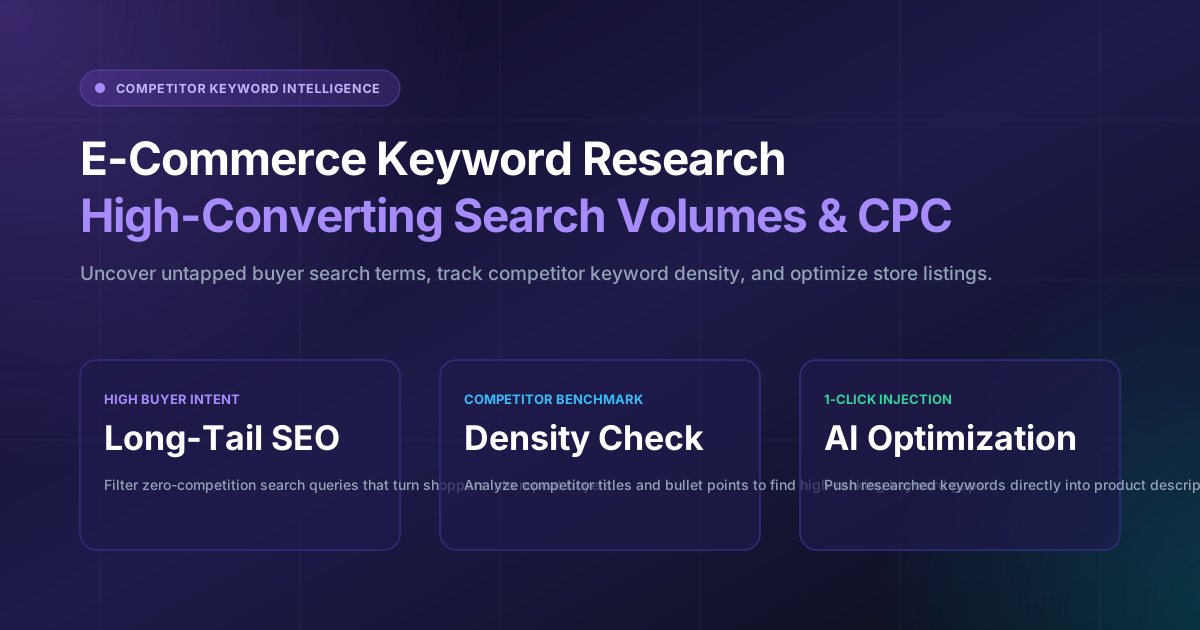
Diagram 8.1: E-commerce keyword research pipeline tracking search intent, search volumes, and competitor density.
With Legends Keyword Research Tracker, you can monitor competitor search terms and optimize your catalog for maximum organic search visibility.
Understanding Commercial Search Intent vs. Informational Queries
Not all search queries are equal. Understanding intent is the foundation of effective e-commerce SEO:
- Informational Queries (Low Conversion): Searches like "how do wireless earbuds work" indicate research mode. These searchers are unlikely to buy immediately.
- Commercial Investigation (Medium Conversion): Searches like "best waterproof wireless earbuds for running" indicate comparison shopping.
- Transactional Buyer Intent (High Conversion): Searches like "buy noise cancelling sport earbuds UK" or "wireless earbuds under £30" indicate high purchasing intent.
A dedicated ecommerce keyword research tool filters search terms by commercial intent, ensuring you optimize product pages for keywords that drive revenue rather than empty pageviews.
Analyzing Competitor Keyword Density & Gap Analysis
To outrank established competitors on Google, you must analyze how they optimize their product pages. Our keyword tracking engine inspects competitor titles, bullet points, and meta tags to measure keyword density. By identifying secondary keywords your competitors missed, you can capture valuable long-tail search traffic.
Strategic Keyword Placement Across Product Pages
Once you harvest high-potential search phrases with our ecommerce keyword research tool, placing them strategically across your product page architecture is critical. Google's ranking algorithms evaluate relevance hierarchically:
- Product Title (H1): Place your primary keyword in the first 4 to 6 words of your title (e.g., "Cordless Electric Spin Scrubber with Extension Handle").
- First 100 Words: Naturally integrate the primary search term in your opening product introduction.
- Bullet Points & Specifications: Distribute secondary LSI keywords across technical bullet points (e.g., "rechargeable bathroom cleaner", "shower tile scrubber brush").
- Image Alt Text: Provide descriptive alt tags containing search keywords for image search discovery.
Comparison: Guessing Search Terms vs. Keyword Research Tool
| Metric / Task | Manual Guesswork | Legends Keyword Tool |
|---|---|---|
| Monthly Search Volume | No data | Verified monthly query counts |
| CPC & Commercial Value | Unknown | Estimated cost-per-click values |
| Competitor Density Check | Manual reading | Automated density percentages |
| AI Description Injection | Manual insertion | 1-Click injection into AI writer |
Step-by-Step: How to Perform E-Commerce Keyword Research
- Enter Seed Keyword: Open the Keyword Tracker screen and type your main product category (e.g. "air fryer liners").
- Review Volume & Intent: Filter by search volume and commercial intent score to find high-traffic, low-difficulty queries.
- Save High-Converting Keywords: Add target search terms to your project keyword watchlist.
- Inject into Product Listings: Use the AI Product Optimizer to weave selected keywords into product titles, bullet points, and SEO descriptions.
Finding High-Converting Question Queries for Google PAA (People Also Ask)
Google's search results pages are increasingly dominated by 'People Also Ask' (PAA) expandable question accordions. Winning featured placements in these question snippets allows your store to capture organic shoppers at zero media acquisition cost.
Our ecommerce keyword research tool identifies the exact questions shoppers type regarding your product category (e.g. "How long does the battery last on cordless scrubbers?", "Can silicone air fryer liners be washed in dishwashers?"). By answering these questions directly in your product FAQs and bullet points, you signal topical authority to search engine crawlers.
Reverse-Engineering Competitor Amazon Brand Store Meta Tags
Top Amazon sellers spend thousands of dollars optimizing listing copy and backend search terms (hidden keywords). Analyzing top-ranking competitor listings in your niche reveals high-converting search phrases that traditional keyword tools frequently overlook.
Our ecommerce keyword research tool crawls competitor brand storefronts and extracts organic search terms from title structures, feature bullets, and customer review topics. Injecting these proven commercial terms into your independent Shopify or WooCommerce store helps you capture market share from established industry leaders.
Frequently Asked Questions (FAQ)
How does the ecommerce keyword research tool estimate search volume?
Our tool aggregates benchmark data from major search engines and commercial e-commerce advertising networks, providing reliable monthly search volume estimates.
Can I track competitor rankings over time?
Yes. You can save keywords to your active tracking dashboard to monitor search ranking fluctuations and competitive density changes.
What is an ideal keyword density for e-commerce product pages?
We recommend a primary keyword density of 1.0% to 1.5% (roughly 4 to 8 mentions per 800-1,000 words), avoiding keyword stuffing while signaling relevance to search engines.